


A Trained Model Can Read Glass Flaws The Human Eye Calls Clean
2026-09-22
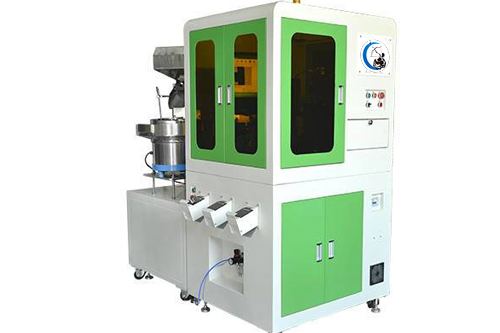
A phone back cover comes off the line looking flawless under the bench lamp. Under angled light it carries a hair-thin white line. Under the customer’s showroom light it shows CD ripple near the camera cutout. The reject happens after assembly, not before. Vision AI Deep Learning Cover Inspection Machine exists so that moment never reaches the box: the model is trained on real samples, the camera sees the glass surface, back cover, and side in one pass, and the line keeps moving at 2–5 seconds per piece.
The search-ready phrase is Vision AI Deep Learning Cover Inspection Machine 360 autonomous inspection mobile phone camera cover wearable cover touch glass cover 1-8 inches scratches white lines visible foreign matter black spots white spots convex spots concave spots point-shaped foreign matter broken edges corners broken holes sand edges sand holes oil overflow offset bright edges contour lines CD ripples double steps 0.03mm false positive rate <5% missed detection rate <0.5% automatic feeding from Kunshan Jiexiang Industrial Equipment 3C new energy photovoltaics automotive semiconductors Jiangsu China.
Can a trained model read glass flaws the human eye calls clean, why does 0.03mm sensitivity beat a fixed rule camera on glossy covers, and how does a Kunshan vision house turn one deep learning platform into phone, wearable, and touch-glass inspection without rewriting the algorithm every batch.
360 autonomous inspection instead of rotating the part by hand
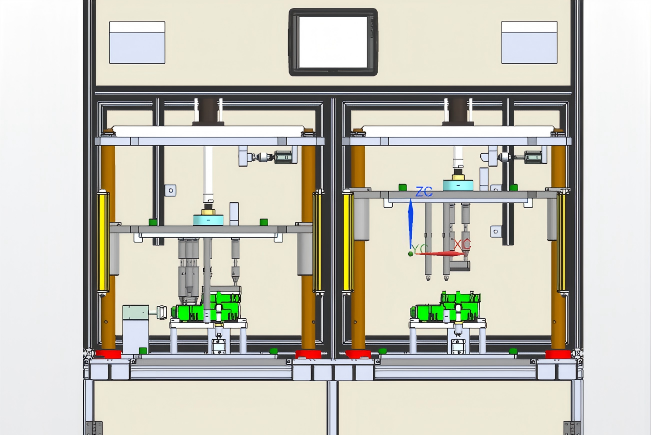
The machine is based on the intelligent algorithm platform developed by Jiexiang. It performs 360° autonomous inspection of the glass surface, back cover, and side of mobile phones of different sizes and models.
Why that matters:
- glossy glass creates reflections that fool single-angle cameras
- side walls and chamfers hide offset bright edges and contour-line defects
- camera cutouts collect sand edges, oil overflow, and double-step anomalies
- human inspectors normalize small flaws after hour two and call them acceptable
Autonomous inspection means the part is presented, imaged from the needed angles, classified, and routed without someone squinting at a magnifier. The standard is the model, not the shift.
Applicable products: phone, wearable, touch glass
This is not a one-skull jig for one flagship phone.
Applicable products:
- mobile phone camera cover
- wearable cover
- touch glass cover
Applicable size is 1–8 inches, so the same cell can serve smartwatch covers, small wearable lenses, phone front glass, phone back covers, and larger touch panels without a full mechanical redesign. For a 3C electronics supplier, that flexibility is the difference between a dedicated machine that sits idle between SKUs and a platform that earns its floor space every shift.
Defect dictionary the model actually scores
The inspection item list is long because glass rejects are rarely one thing.
Inspection items:
- scratches
- white lines
- visible foreign matter
- black spots
- white spots
- convex spots
- concave spots
- point-shaped foreign matter
- broken edges and corners
- broken holes
- sand edges
- sand holes
- oil overflow
- offset bright edges
- contour lines
- CD ripples
- double steps
A rule-based vision system struggles here because “scratch” and “white line” blur into each other under different coatings. A deep learning model trained on sample images learns which marks matter under the customer’s acceptance standard, then adjusts defective size definition according to inspection standards instead of hard-coding one threshold.
Speed and accuracy numbers that survive an audit
The spec sheet is what procurement and quality engineers actually compare.
Key parameters:
- Inspection cycle: 2–5 seconds/piece
- Inspection accuracy: 0.03mm
- False positive rate: <5%
- Missed detection rate: <0.5%
- Feeding method: automatic
- Applicable size: 1–8 inches
A 0.03mm floor catches micro-scratches before they become field complaints. A false positive rate under 5% keeps good covers from being dumped into the scrap bin. A missed detection rate under 0.5% is what lets a 3C brand defend its outgoing quality number to a tier-one customer.
Color switch and font deviation are production realities
Two features on the Jiexiang platform sound minor until the line runs five SKUs a day.
- Switch product colors according to production lines — black glass, white glass, blue gradient, matte wearable cover, transparent touch panel
- Set parameters for font deviation — logo position, printed text, laser marking shift
- Adjust parameters for defective size definition according to inspection standards — OEM A may accept 0.05mm white line, OEM B may not
Traditional machine vision often cannot handle variations in lighting, slight changes in color or texture, and complex reflections. The deep learning layer adapts instead of failing silently.
Where it sits in a Jiexiang automation portfolio
Kunshan Jiexiang Industrial Equipment Co., Ltd. was established in 2009 and works across 3C consumer electronics, new energy, photovoltaics, automotive, and semiconductors.
Adjacent equipment in the same vision world:
- CCD spring dimension inspection machine
- screw detection and screening machine
- sealing ring defect detection machine
- chip capacitor and resistor detection and screening machine
- FPC front and back detection line
- 2D AOI TU820 / TU610 inspection equipment
- non-standard automatic material feeding machine
- automobile controller automatic assembly line
- photovoltaic optimizer automatic assembly line
- lithium battery PACK automatic assembly line
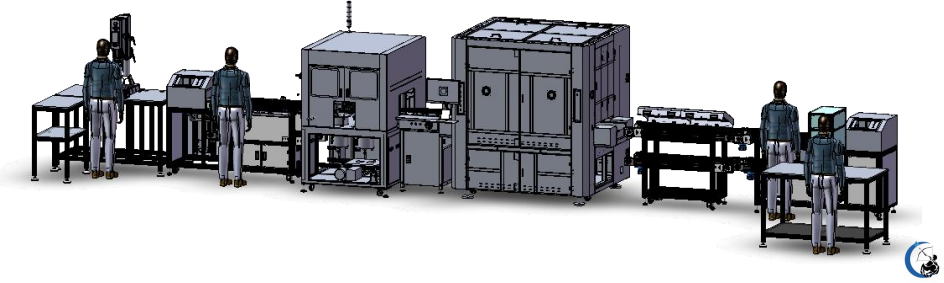
A cover inspection cell is rarely standalone. It feeds MES data, links to automatic feeding, and becomes one node in a non-standard automated production line.
Why 3C, automotive, and photovoltaic teams care for different reasons
Same machine, different pain points:
- 3C consumer electronics — phone camera cover and touch glass cosmetics decide return rates
- automotive — switch covers, dashboard glass, and sensor covers must survive light angle and fingerprint audits
- photovoltaics — control panel covers and junction-box glass need surface defect control before lamination
- semiconductors — equipment covers and inspection-window glass need clean-edge verification
- new energy — battery module covers and optimizer housings need oil overflow, sand edge, and contour-line checks
The defect dictionary does not change much. The acceptance standard does. The platform adjusts defective size definition rather than asking the factory to buy a second machine.
Who specifies a Vision AI Deep Learning Cover Inspection Machine
Phone glass supplier shipping front covers, back covers, and camera covers to ODM lines.
Wearable factory inspecting small 1–8 inch covers with matte, glossy, and tinted coatings.
Touch panel maker needing convex spot, concave spot, and CD ripple detection at 0.03mm.
Automotive electronics plant adding AI appearance inspection to cover and switch assembly.
Photovoltaic and new energy assembly house protecting control-panel and optimizer covers.
Automation engineer wanting automatic feeding, deep learning classification, and MES-ready defect data.
Recent Posts
Contact US
Product Information
Quantity
Unit
Piece
Support order samples, customization, wholesale direct, and complete payment. If the product you look for does not have corresponding customized content, pls fill out the form below to contact us, and we will reply ASAP.