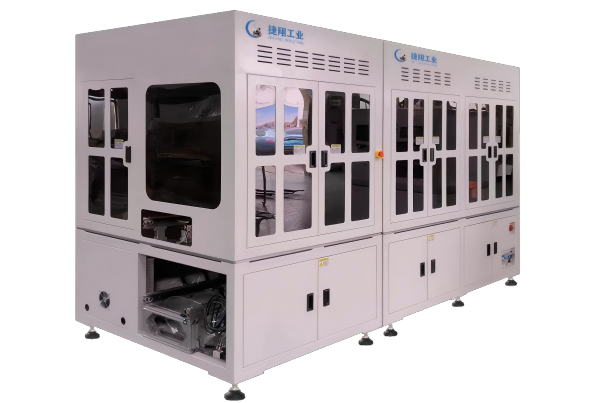
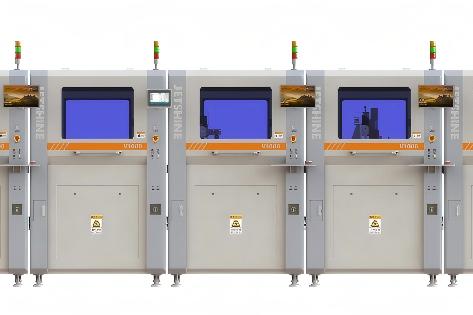
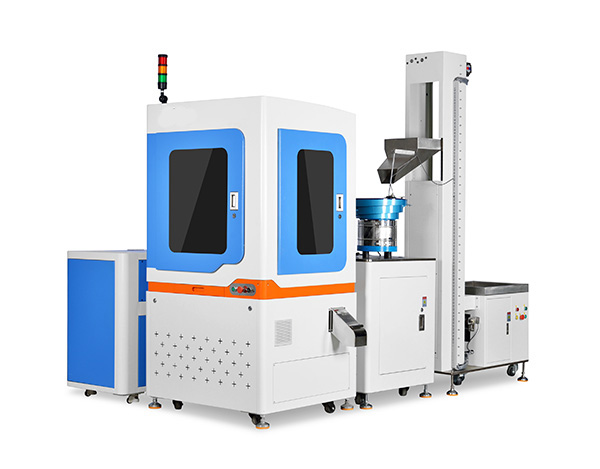
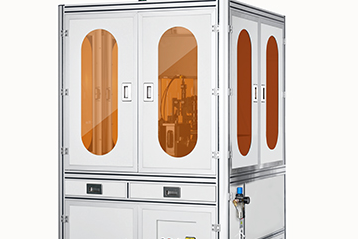
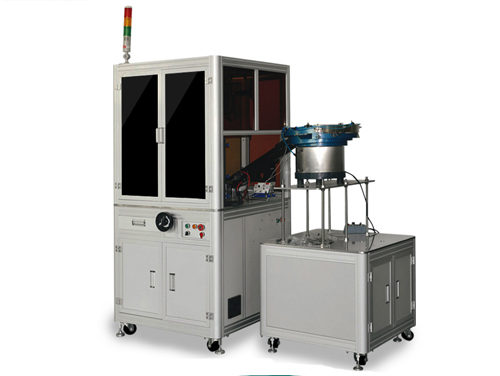
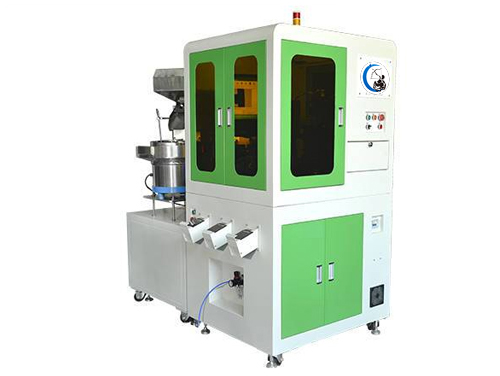
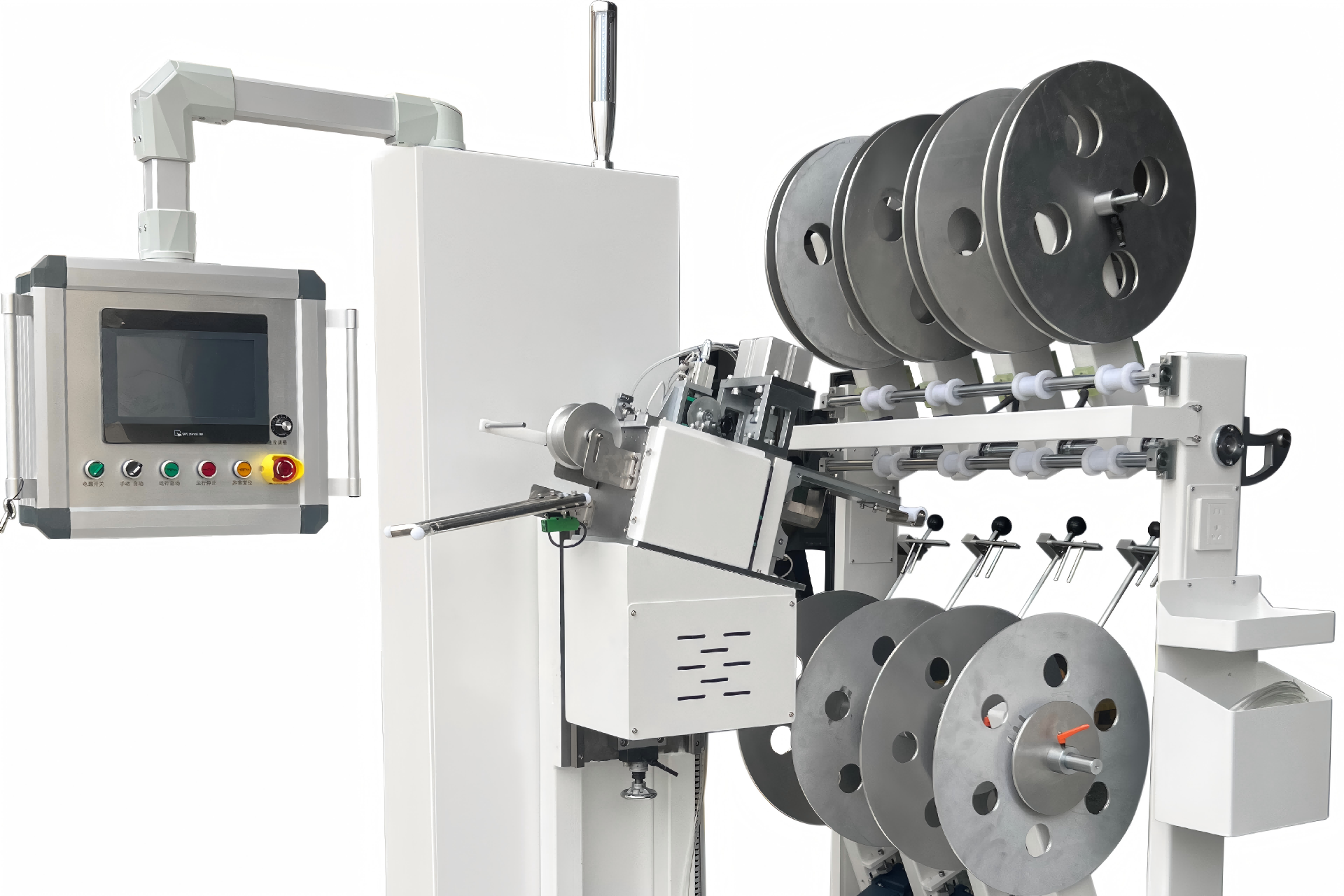
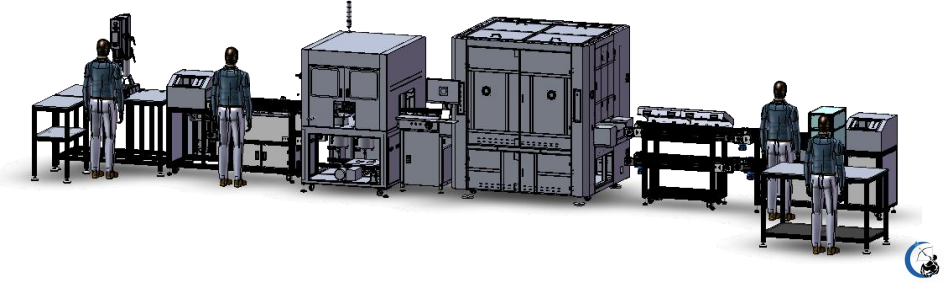
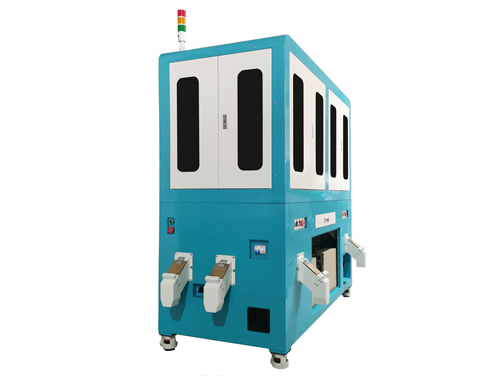
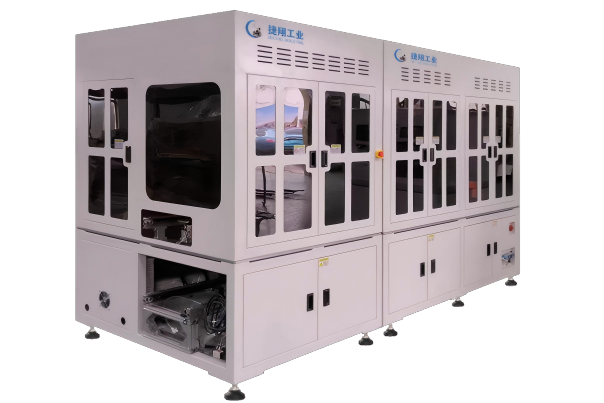
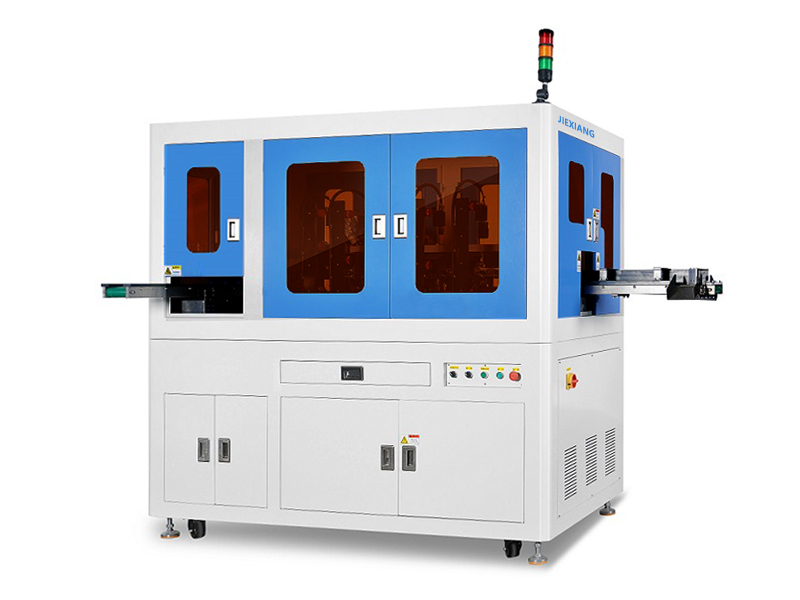
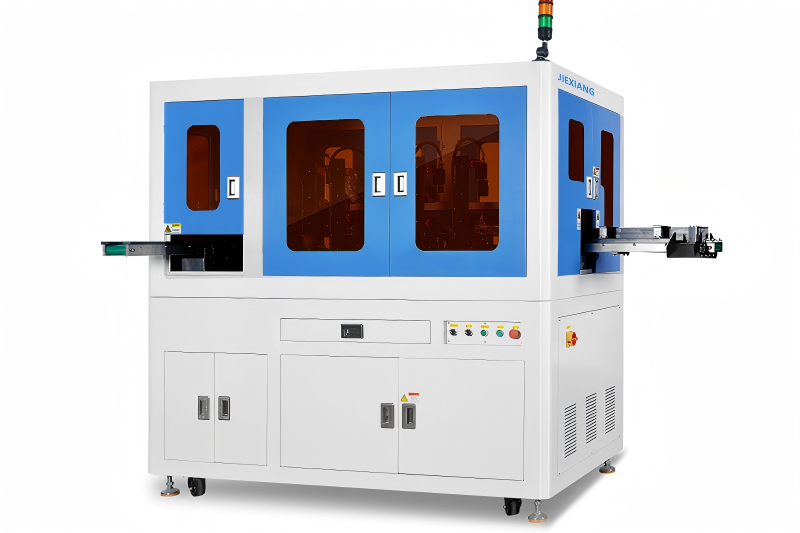
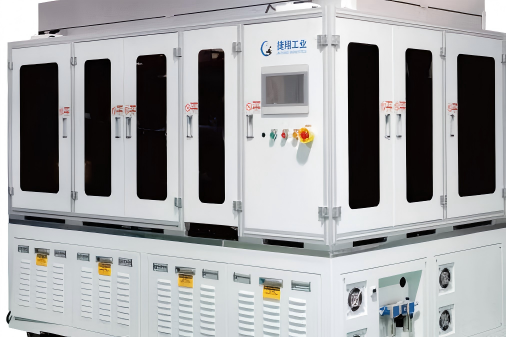
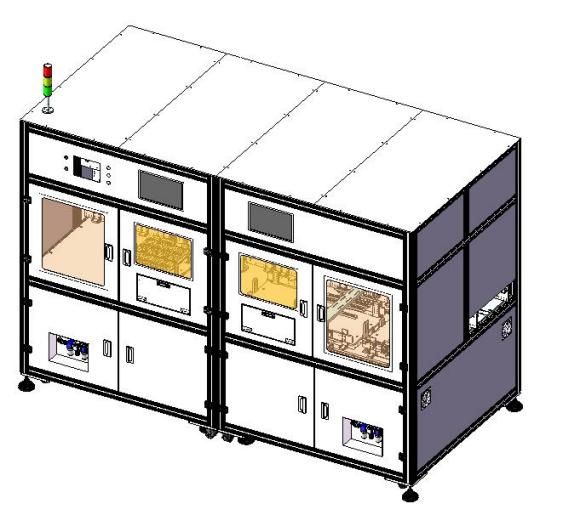
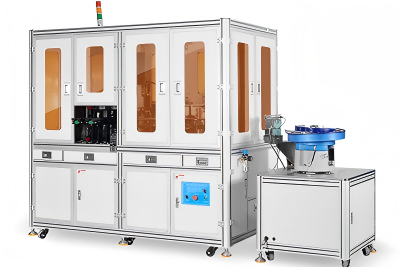
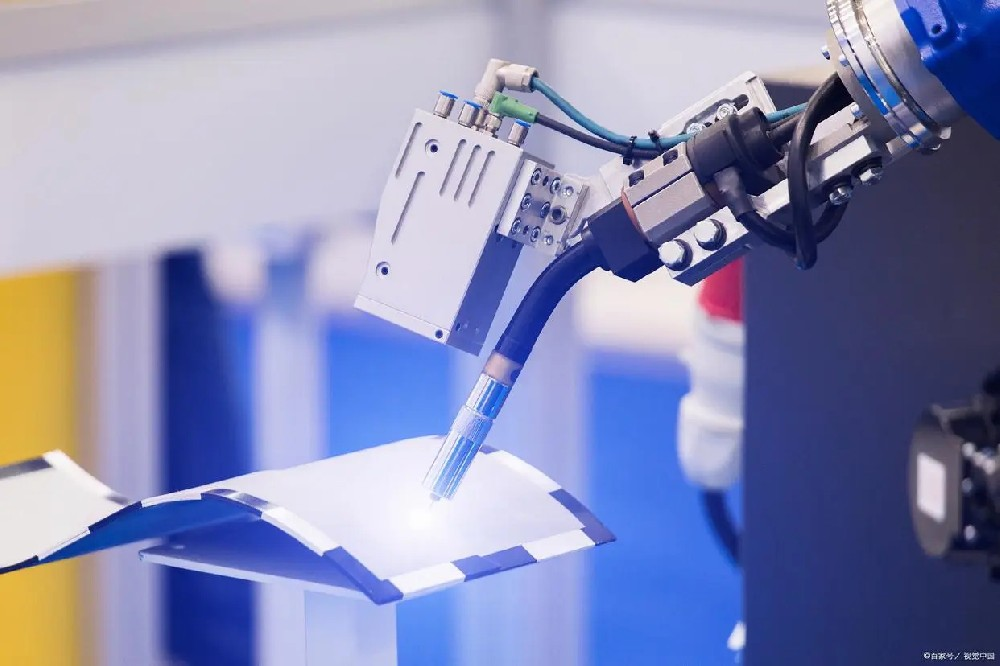
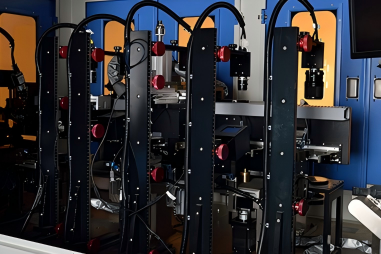
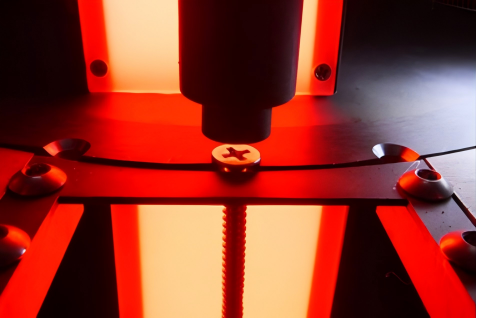
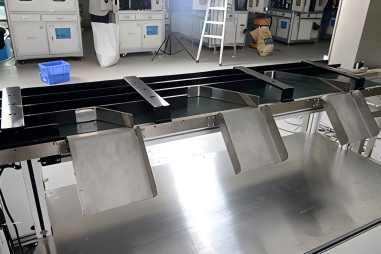
A belt sander takes a flat edge; a robot with a floating spindle averages ±0.1 mm and fights every new part shape with a fresh offline program. The die-cast aluminum world—new-energy bracket, 3C hinge housing, automotive window regulator slider—has none of the luxury of a flat edge: it has a gate stub, a parting-line flash, an ejector-pin witness mark, a slide gap film, and a boss the brush cannot reach without scarring the adjacent face. Removing those with ±0.01 mm round-trip accuracy, on a 1860 mm wide cell, while the same spindle also does a micro-carve logo and auto-avoids a through-hole, is not a sander upgrade—it is a rigid gantry, a taught path, and an air-avoidance table welded into one painted-iron-and-acrylic box. The Multifunctional deburring machine — Painted Iron Pipe Welded Bottom Frame Aluminum Profile Upper Frame Acrylic Cover 380V 0.4-0.6MPa 1860x1820x1650mm Round-Trip Accuracy 0.01mm Fine-Tune Burrs Micro-Carving Air Avoidance On Die-Cast Aluminum Parts Matrix Copying Offset Modification Correction Point Setting Program Transfer Between Machines Fool-Proof Detection Touch Operation For 3C New Energy Hardware Automotive Die Casting OEM ODM Sample Custom Wholesale Direct Industrialjx does exactly that: 380 V three-phase, 0.4–0.6 MPa pneumatic clamp, ±0.01 mm repeatability, single-machine run, program copied machine-to-machine. But why does ±0.01 mm round-trip matter more on a gate stub than on a sheet edge, how does "air avoidance" beat a full CAD/CAM re-teach when the part revises, and what makes Industrialjx—sample order, customization, wholesale direct, program transfer between machines—a cell builder rather than a belt-sander trader with a touchscreen glued on? Below is the full breakdown for die-casting plant supervisors, new-energy bracket buyers, 3C housing process engineers, and U.S. integrators evaluating a China deburring cell with English RFQ turnaround.
Why gantry rigidity + air-avoidance table out-tunes a floating-spindle robot
The Multifunctional deburring machine — Painted Iron Pipe Welded Bottom Frame Aluminum Profile Upper Frame Acrylic Cover 380V 0.4-0.6MPa 1860x1820x1650mm Round-Trip Accuracy 0.01mm Fine-Tune Burrs Micro-Carving Air Avoidance On Die-Cast Aluminum Parts Matrix Copying Offset Modification Correction Point Setting Program Transfer Between Machines Fool-Proof Detection Touch Operation For 3C New Energy Hardware Automotive Die Casting OEM ODM Sample Custom Wholesale Direct Industrialjx is anchored in five reconciled facts—accuracy chain, burr-type tooling, air-avoidance logic, frame economics, and labor telemetry:
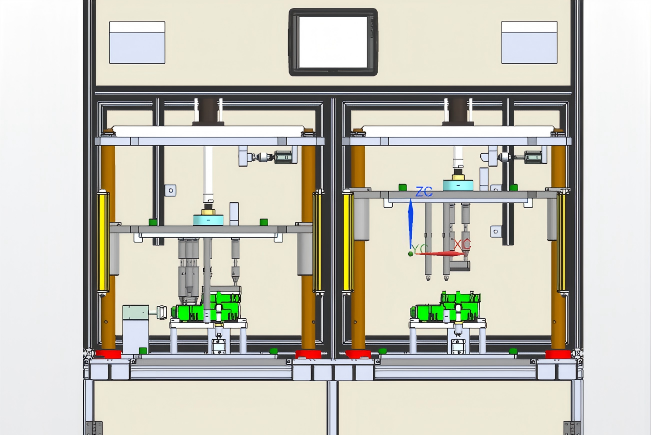
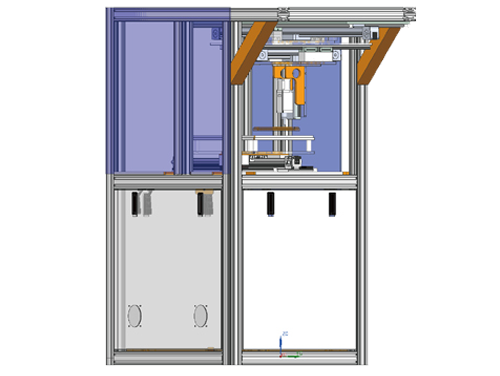
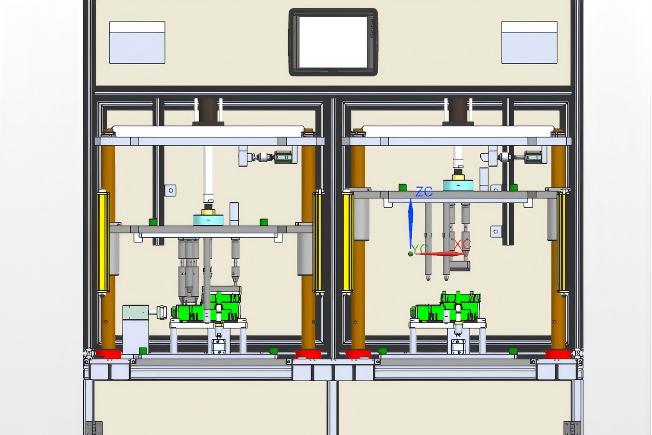
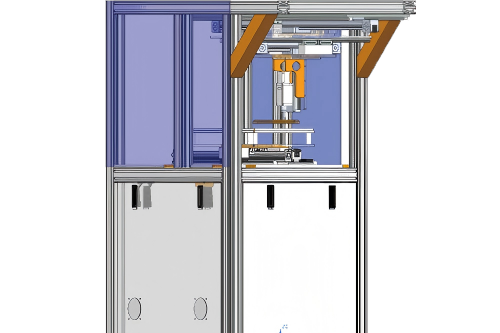
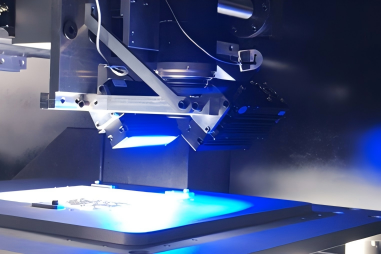
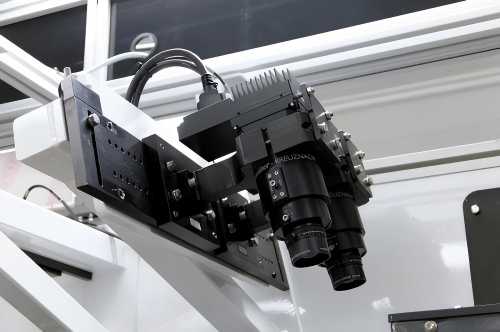
±0.01 mm Round-Trip Is A Gantry Number, Not A Spindle Number. A floating robot spindle absorbs force and loses position; a belt grinder has no position at all. The industrialjx cell uses a painted iron-pipe welded bottom frame (mass, damping, no resonance at 1860 mm span) with an aluminum-profile upper gantry carrying the servo axis—round-trip accuracy ±0.01 mm means the tool tip returns to the same taught point within 10 µm over a full shift, not just once. On a die-cast gate stub 0.3 mm proud, that 10 µm is the difference between "clean break" and "dipped into the base wall." Brother's DG-1 makes the same argument against robots with a rigid BT15 spindle instead of floating—industrialjx reaches it with a welded-iron base and a taught-path controller at a fraction of the DG-1 ticket.
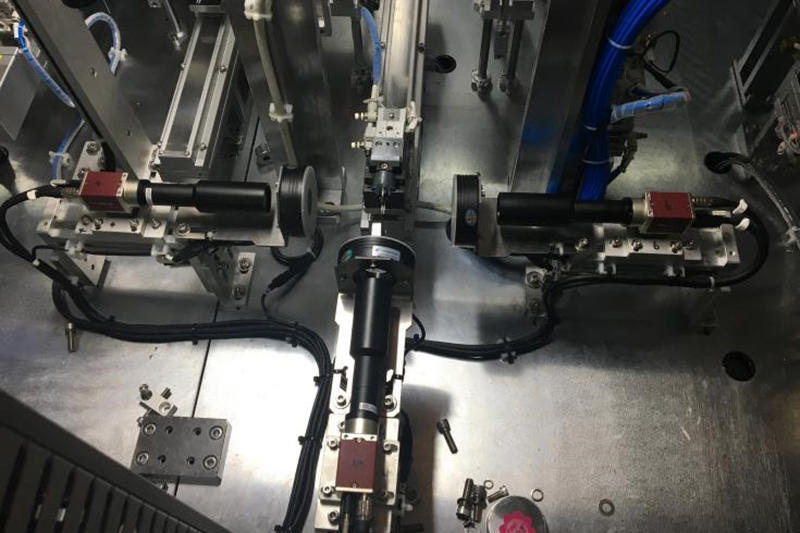
Four Burr Types, Three Tools, One Spindle. Die-cast aluminum presents: (1) gate/overflow stub—solid carbide rotary file, 6–10 mm; (2) parting-line flash—fiber-abrasive brush or ceramic pin; (3) ejector-pin mark—small ball end mill light pass; (4) slide-gap film—thin kerf disc. The "fine-tune burrs" function switches RPM and Z-force per segment from the touch HMI; "micro-carving" means the same spindle drops to 8k RPM and 0.05 mm depth to clear a logo pocket or a vent channel the mold missed—no second machine. For a 3C camera bracket with a molded-in brand character, that merges deburr + engrave into one fixture cycle.
Air Avoidance = Taught Points + Offset, Not CAD/CAM Recompile. "Air avoidance on die-cast aluminum parts of various shapes" is the page's quiet killer feature: the operator teaches correction points on a master part, the controller auto-connects the path, and when the next revision moves a boss 2 mm, you do offset modification on the touch screen—not re-export STEP to CAM, regenerate toolpath, re-simulate. Matrix copying lets a 4-up fixture (same part ×4) inherit one taught path with X/Y matrix shift; program transfer between machines pushes the .prg to the sister cell over LAN so a 3-shift plant replicates the night-shift path to the day-shift cell in 40 seconds. That is the Brother DG-1 "representative point instruction" idea delivered on a 1860 mm painted-iron frame instead of a 998 mm compact brother.
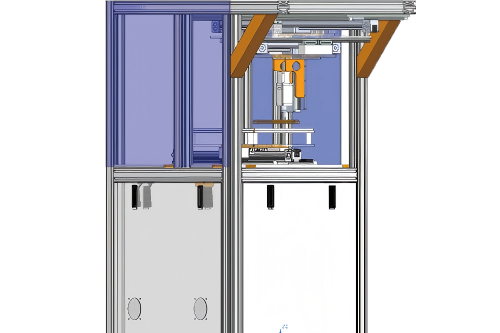
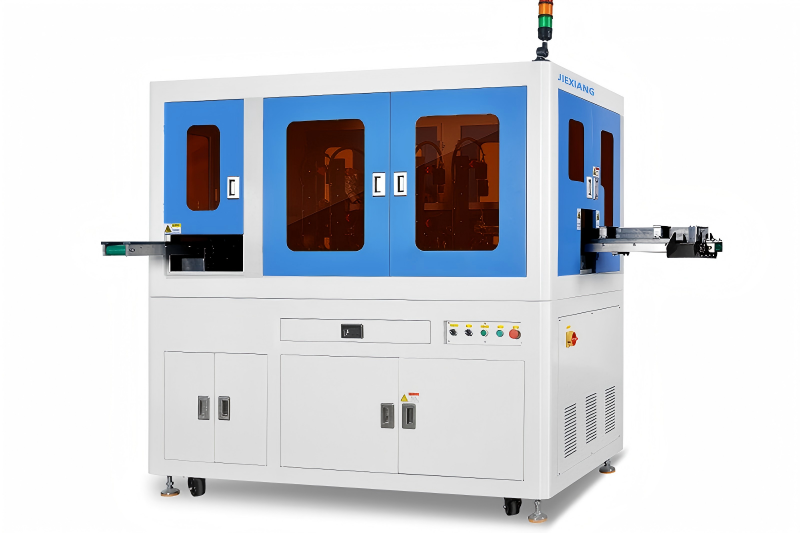
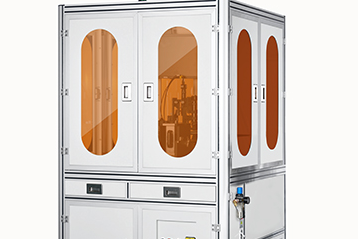
Painted Iron Bottom + Aluminum Upper Is A Cost-Rigidity Split, Not A Cheap-Out. Full aluminum-profile frames ring at servo accel; welded steel is rigid but heavy and hard to modify. Industrialjx splits the job: welded painted iron pipe at the base takes the 380 V servo reaction and the 0.4–0.6 MPa clamp reaction, aluminum profile upper frame carries guards, acrylic cover, HMI, and light fixtures—serviceable, viewable, grounded. For a ±0.01 mm spec at 1860 mm width, the base is doing the work; the top is doing the ergonomics. A full-aluminum version would cost 30% more and ring 0.02 mm into the path.
380 V 3-Phase + 0.4–0.6 MPa Is The Existing Shop Air, Not A Special Utility. The page states the working requirement plainly: industrial three-phase 380 V, air 0.4–0.6 MPa. That is the Chinese die-casting plant default (most have 0.5–0.7 MPa line, 380 V bus), so the machine drops in beside the die-caster with one breaker and one air tee—no compressor upgrade, no 480 V transformer for a U.S. buyer (they swap the servo drive to 480 V 3Φ, keep the 0.4–0.6 MPa clamp). For a Vietnam/Thailand satellite line, same air, 415 V drive option.
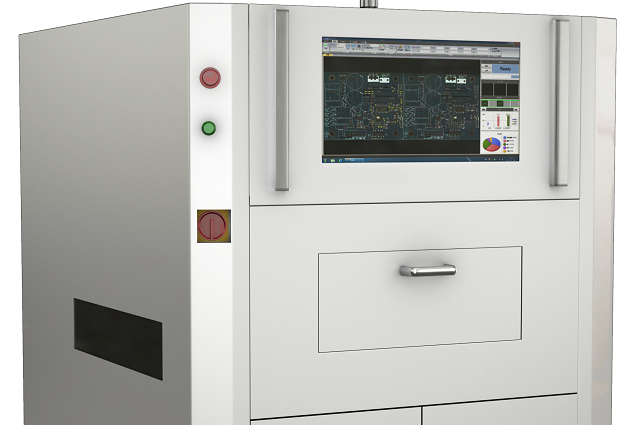
Fool-Proof Detection + Skilled Statistics + Time Monitoring = Piece-Rate Visibility. "One worker manages several machines" only works if the HMI tells the worker which machine faulted and why. Fool-proof detection (wrong fixture, missing part, tool-break sensor) stops the cell before it scrapes a batch; skilled statistics logs per-operator cycle count (piece-rate fairness); time monitoring logs spindle-on hours vs idle (OEE, not vibes). For a Dongguan die-cast shop on 22 RMB/pc piece rate, that telemetry is the labor argument, not the "save labor" slogan.
Industrialjx As Cell Builder. Same footer as the non-standard feeder article: sample order, customization, wholesale direct, complete payment, form-reply. The deburring page adds one decisive line—program transfer between machines—which means Industrialjx is selling a replicable cell, not a box. A buyer in Ohio can order 1 sample (validated on their bracket), then 4 production cells with the sample's .prg pushed to all four over the quote package.
Industrialjx / industrialjx.com supply context
From the product node (Multifunctional-deburring-machine) + sibling feeder page :
Maker: Industrialjx (Smart Industrial Automation Solutions), industrialjx.com, 3C + New Energy focus
Product class: Multifunctional deburring machine (rigid gantry, taught-path, die-cast aluminum)
Dimensions: 1860 × 1820 × 1650 mm (L×W×H)
Frame: Painted iron-pipe welded bottom + aluminum profile upper + acrylic cover
Utility: 380 V 3-phase industrial, pneumatic 0.4–0.6 MPa
Accuracy: Round-trip ±0.01 mm
Process: Fine-tune burrs, micro-carving, air avoidance on die-cast aluminum of various shapes
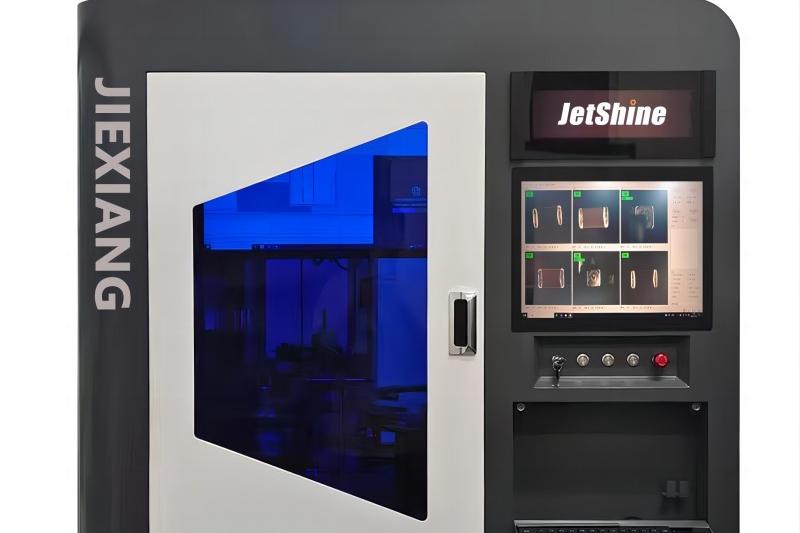
Control: Touch HMI, fool-proof detection, skilled statistics, time monitoring, matrix copying, offset modification, correction point setting, program transfer between machines
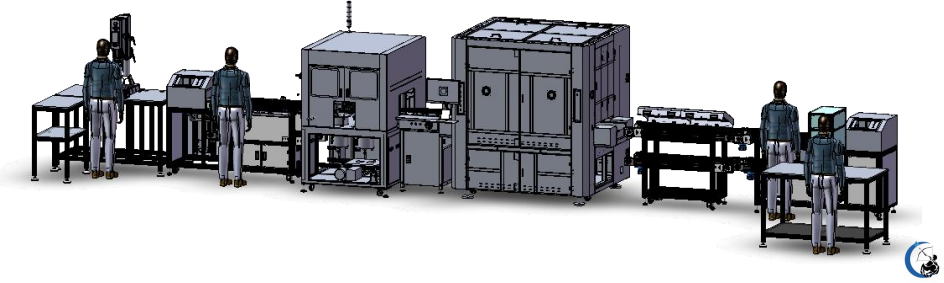
Operation: Single machine, easy install, one worker multiple machines
Commercial: Order samples, customization, wholesale direct, complete payment
URL:
https://industrialjx.com/Multifunctional-deburring-machine Key characteristics and application scope
Product Name: Multifunctional deburring machine
Alternate Terms: Industrialjx 1860mm die-cast aluminum deburring cell ±0.01mm, painted iron base acrylic gantry micro-carving air-avoidance deburrer, touch HMI matrix-copy offset-modify program-transfer deburring machine for 3C/new energy/automotive, multifunction gate-flash-ejector-pin deburr and micro-engrave OEM, industrialjx.com deburring equipment
Device class: Rigid-gantry taught-path deburring + micro-carving cell (not belt sander, not floating-spindle robot, not vibratory tub)
Core Applications:
New-energy die-cast bracket — gate stub, parting flash, busbar slot edge, one-cycle clean to anodize-ready
3C aluminum housing — hinge bracket, camera ring, molded logo micro-carve + burr fine-tune
Automotive die casting — window-regulator slider, sensor boss, ejector-pin mark removal to seating face
Hardware / lock body — zinc-aluminum alloy gate, slide gap film, micro-chamfer
Pilot-to-production replication — 1 sample cell validated, .prg transferred to 4–8 line cells
Companion logic: Same Industrialjx PO pulls the non-standard feeding machine (previous article) for incoming tray load, plus functional test handler and laser-mark indexer for a die-cast-to-pack cell.
Application logic by scenario
New-Energy Motor Bracket, ADC12, 4-up fixture: Taught path on master: gate file (8k RPM, 0.2 mm step) → parting flash brush (12k, 0.05 N) → ejector-pin mill (ball Ø3, 0.1 mm) → air-avoidance around Ø6.5 bore. Cycle 38 s/pc ×4 = 9.5 s/pc effective. ±0.01 mm holds bore-to-edge 0.15 mm chamfer. One operator runs 3 cells = 1140 pcs/h vs 220 pcs/h manual.
3C Camera Ring Housing: Micro-carving function drops to 8k RPM, 0.04 mm depth, engraves model code on inner flange after deburr; correction-point setting compensates for die-wear revision every 50k shots—offset modify, no CAM.
Automotive Slider, slide-gap film 0.08 mm: Fiber brush with radial compliance in Z, air avoidance keeps brush off the grease groove; skilled-statistics logs 10-hour tool life, HMI prompts brush change before burr escapes.
Sample-First Replication: Ohio buyer orders 1 sample (their bracket, 1860 mm frame trimmed to 1500 mm), validates ±0.01 mm Cpk>1.33, then 4 cells at 1860 mm with sample .prg pushed via USB/LAN—program transfer between machines, no re-teach.
Procurement and spec checklist
When specifying Multifunctional deburring machine — Painted Iron Pipe Welded Bottom Frame Aluminum Profile Upper Frame Acrylic Cover 380V 0.4-0.6MPa 1860x1820x1650mm Round-Trip Accuracy 0.01mm Fine-Tune Burrs Micro-Carving Air Avoidance On Die-Cast Aluminum Parts Matrix Copying Offset Modification Correction Point Setting Program Transfer Between Machines Fool-Proof Detection Touch Operation For 3C New Energy Hardware Automotive Die Casting OEM ODM Sample Custom Wholesale Direct Industrialjx :
✅ Part scope — send 3 sample die-cast parts + burr photo (gate/flash/ejector/slide); confirm tool set per burr type.
✅ Accuracy — ±0.01 mm round-trip verified on dial indicator over 8 hr, not catalog repeatability of servo.
✅ Utility — 380 V 3Φ (or 480 V/415 V drive swap), 0.4–0.6 MPa clean dry air; confirm air consumption CFM.
✅ Frame — painted iron bottom weld thickness, aluminum profile 4080/8080, acrylic 5–8 mm static-dissipative.
✅ Air avoidance — teach-point count on master, offset modify workflow, matrix copy up to N-up fixture.
✅ Micro-carve — max depth/engrave RPM, logo font support, Z-force limit to avoid base cut.
✅ Telemetry — fool-proof IO list, skilled-statistics export (CSV/Modbus), time-monitoring OEE fields.
✅ Replication — program transfer method (USB/LAN), sample-first MOQ 1 pc, production MOQ, FOB/EXW.
Conclusion: The multifunction deburring cell is a taught-path gantry, not a sander with a guard
The Multifunctional deburring machine — Painted Iron Pipe Welded Bottom Frame Aluminum Profile Upper Frame Acrylic Cover 380V 0.4-0.6MPa 1860x1820x1650mm Round-Trip Accuracy 0.01mm Fine-Tune Burrs Micro-Carving Air Avoidance On Die-Cast Aluminum Parts Matrix Copying Offset Modification Correction Point Setting Program Transfer Between Machines Fool-Proof Detection Touch Operation For 3C New Energy Hardware Automotive Die Casting OEM ODM Sample Custom Wholesale Direct Industrialjx solves the die-cast aluminum problem a belt sander cannot touch: gate stub, parting flash, ejector-pin mark, slide film, plus a micro-carved logo—removed and engraved on one rigid gantry at ±0.01 mm round-trip, with air-avoidance paths taught once and offset-modified per die revision instead of recompiled in CAM. The painted-iron base carries the servo reaction so the aluminum upper frame can stay light and the acrylic cover can stay viewable; 380 V and 0.4–0.6 MPa are the shop defaults, not custom utilities; fool-proof detection and skilled statistics turn "one worker, several machines" into counted piece-rate, not hope. Sold by Industrialjx (sample order → custom → wholesale direct, program transfer between machines), the cell arrives with the master part's .prg ready to push to the production sisters—paired with the non-standard feeding machine and a test handler on the same PO, it becomes the finishing layer in a die-cast-to-pack line whose ±0.01 mm survives the Cpk audit.