


How to Integrate FPC Detection Lines into Smart Factory Systems
2026-02-25
As electronics manufacturing moves toward Industry 4.0, inspection equipment is no longer an isolated machine on the production floor. Instead, it becomes a critical node in a fully connected smart factory system.
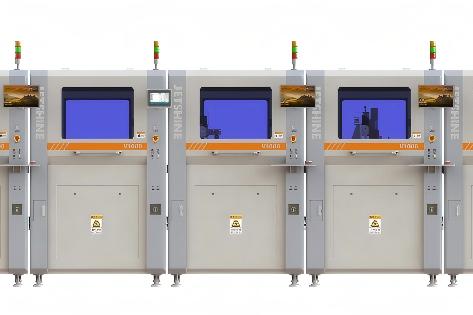
For manufacturers using an FPC front and back detection line, integration with smart factory infrastructure is essential to unlock real value. It’s not just about detecting defects anymore—it’s about data, traceability, and continuous process optimization.
So how exactly can FPC detection lines be integrated into smart factory systems? Let’s break it down step by step.
Why Integration Matters in FPC Manufacturing
Flexible Printed Circuits (FPCs) are widely used in high-end electronics where precision and reliability are critical. A single defective batch can disrupt downstream SMT assembly or final product performance.
In traditional setups, inspection results are stored locally within the machine. Operators manually check reports, and data is rarely used for long-term analysis. Over time, this creates information silos.
In a smart factory environment, inspection data should flow seamlessly across systems. When FPC detection lines are connected to MES, ERP, and quality management systems, manufacturers gain real-time visibility into production performance. And honestly, this is where efficiency really starts to scale.
Core Components Required for Integration
To integrate an FPC detection line into a smart factory system, several technical elements must be aligned:
1. Standardized Communication Protocols
Modern FPC inspection equipment should support industrial communication standards such as:
-
SECS/GEM
-
OPC UA
-
TCP/IP or Ethernet-based communication
These protocols allow the detection line to exchange data with Manufacturing Execution Systems (MES) and other automation platforms.
Without standardized communication, integration becomes complicated and expensive.
2. Real-Time Data Collection and Transmission
An integrated FPC detection line must be capable of transmitting:
-
Defect type and location
-
Yield rate statistics
-
Process deviation data
-
Equipment operating status
Real-time data sharing allows engineers to identify abnormal trends quickly. For example, if line width deviations increase, upstream etching parameters can be adjusted immediately.
3. Barcode or RFID Traceability
Smart factories rely heavily on traceability. Each FPC panel should be uniquely identified using barcode or RFID systems.
When the FPC front and back detection line reads this identifier, inspection data is linked directly to that specific product. This ensures full production traceability from raw material to final assembly.
If quality issues arise later, manufacturers can trace the root cause efficiently.
Integration with MES and Quality Management Systems
One of the most important integration points is the MES (Manufacturing Execution System).
When connected to MES, the FPC detection line can:
-
Automatically upload inspection results
-
Trigger alarms for high defect rates
-
Prevent defective batches from moving to the next process
-
Provide digital quality reports
In addition, integration with Quality Management Systems (QMS) enables statistical process control (SPC). Over time, defect data analysis supports predictive maintenance and process improvement.
It allow manufacturers to move from reactive inspection to preventive quality control.
Benefits of Smart Integration
Once fully integrated, an FPC detection line delivers much more than basic inspection:
1. Improved Yield Management
Centralized defect data allows production managers to monitor yield performance across shifts, lines, and product models.
2. Faster Root Cause Analysis
When abnormal defects occur, engineers can quickly analyze historical inspection data and identify correlations with specific process stages.
3. Reduced Manual Intervention
Automated data transfer eliminates manual record keeping, reducing human error and administrative workload.
4. Enhanced Production Transparency
Management teams gain dashboard-level visibility into quality metrics, helping with decision-making and capacity planning.
Challenges in Integration
While integration brings clear advantages, it also requires:
-
Equipment compatibility
-
IT infrastructure stability
-
Cybersecurity measures
-
Cross-department coordination
Manufacturers should work with experienced equipment suppliers who understand both inspection technology and industrial system integration.
Because at the end of the day, even the most advanced FPC inspection equipment is only as powerful as the system it connects to.
Conclusion
Integrating an FPC front and back detection line into a smart factory system transforms inspection from a standalone quality checkpoint into a data-driven control center.
By enabling real-time data exchange, traceability, MES connectivity, and statistical process control, manufacturers can improve yield stability, reduce waste, and enhance overall operational efficiency.
In today’s competitive electronics manufacturing landscape, smart integration is no longer optional—it is a strategic necessity.
Recent Posts
Contact US
Product Information
Quantity
Unit
Piece
Support order samples, customization, wholesale direct, and complete payment. If the product you look for does not have corresponding customized content, pls fill out the form below to contact us, and we will reply ASAP.