
How Does a Hanging Screw Detection and Screening Machine Improve Fastener Quality Control?
2025-12-23
In modern manufacturing, screws may appear to be simple components, but their quality directly affects product safety, assembly efficiency, and long-term reliability. Hanging screws, in particular, are widely used in automotive parts, electrical equipment, machinery assemblies, and consumer electronics. Because they are small, numerous, and easy to overlook, quality inspection has always been a challenge.
This is where the Hanging Screw Detection and Screening Machine becomes increasingly important. By replacing traditional manual inspection, this automated equipment helps manufacturers achieve consistent, accurate, and efficient quality control for screws before they enter assembly lines.
1. Why Hanging Screw Quality Control Is More Important Than Many People Think
At first glance, a screw is just a screw. But in real production environments, hanging screws must meet strict requirements in terms of:
-
Length and diameter
-
Thread integrity
-
Head shape and structure
-
Surface defects or deformation
-
Burrs, cracks, or missing threads
If even a small percentage of screws fail to meet standards, the impact can be serious. For example:
-
Assembly machines may jam
-
Products may loosen or fail during use
-
Rework and recalls increase
-
Brand reputation is damaged
Manual inspection struggles to keep up with these risks. Human operators can become tired, distracted, or inconsistent, especially when inspecting large quantities. As production volumes increase, the limitations of manual methods become more obvious.
2. How the Hanging Screw Detection and Screening Machine Works
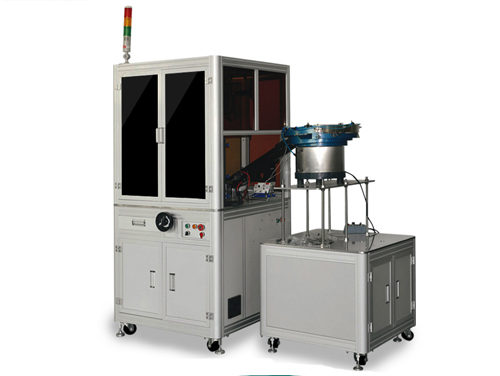
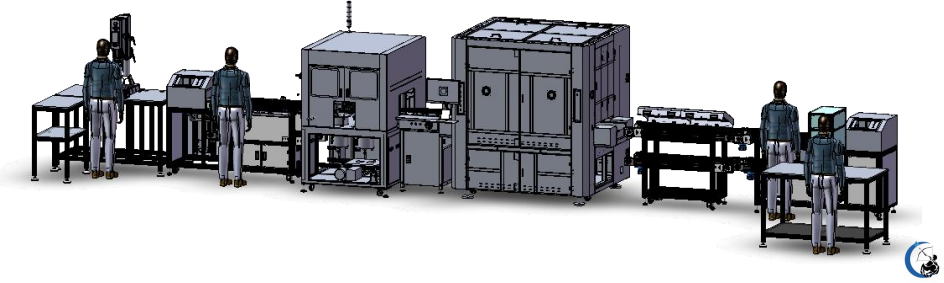
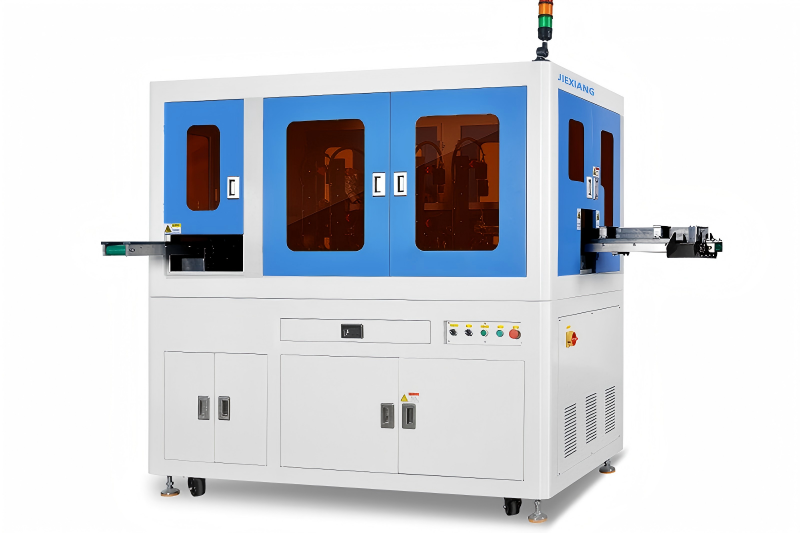
The Hanging Screw Detection and Screening Machine uses automated feeding, precise positioning, and high-resolution visual inspection to examine each screw individually.
Typically, the process includes:
-
Automatic feeding and alignment
Screws are fed into the system and positioned in a stable, repeatable orientation. -
Vision-based detection
Industrial cameras and optical systems capture images from multiple angles. -
Dimensional and appearance analysis
Software algorithms analyze size, thread shape, head integrity, and surface condition. -
Automatic judgment and sorting
Qualified screws continue to packaging or assembly, while defective ones are rejected.
The entire inspection and sorting process happens continuously and efficiently, which manual inspection simply cannot match.
And to be honest, once factories adopt this type of automation, they rarely want to go back.
3. Key Advantages Compared to Manual Screw Inspection
① Higher Accuracy and Consistency
Automated detection ensures every screw is evaluated using the same criteria. There is no fatigue, no mood change, and no subjective judgment involved.
② Significantly Improved Inspection Speed
Thousands of screws can be inspected per hour, supporting high-volume manufacturing without slowing down production.
③ Reduced Labor Costs and Dependency
Operators no longer need to perform repetitive visual checks, allowing labor to be allocated to higher-value tasks.
④ Early Defect Elimination
Defective screws are removed before reaching assembly lines, reducing machine stoppages and downstream quality issues.
⑤ Better Data for Quality Management
Inspection results can be recorded, analyzed, and traced, supporting continuous improvement and supplier evaluation.
This combination of speed, accuracy, and data transparency is why automated screening is becoming standard in fastener production.
4. Real-World Impact on Daily Products
Although consumers rarely think about screws, they rely on them every day. Hanging screws play a role in:
-
Car seats and dashboards
-
Electrical cabinets and control boxes
-
Home appliances
-
Industrial machinery
-
Smart devices and hardware products
A loose or defective screw can lead to noise, vibration, malfunction, or even safety hazards. Automated inspection helps ensure that these small components do their job quietly and reliably.
This is also why manufacturers who invest in screw screening machines often see fewer customer complaints and more stable product quality overall.
5. How This Article Connects to the Previous One
In the previous blog, we discussed why hanging screw detection and screening machines are necessary in modern manufacturing.
In this article, we focused on how the machine actually improves quality control in practice.
Together, these articles form a clear content path:
-
First: identify the problem
-
Second: explain the solution and benefits
Next articles in this series can further explore:
-
Common defects found in hanging screws
-
How to choose the right screening machine
-
Integration with automated assembly lines
This kind of content matrix helps readers understand the topic step by step.
Recent Posts
Contact US
Product Information
Quantity
Unit
Piece
Support order samples, customization, wholesale direct, and complete payment. If the product you look for does not have corresponding customized content, pls fill out the form below to contact us, and we will reply ASAP.