


What Parameters Matter Most When Testing Magnetic Cores?
2026-01-05
Magnetic cores are the backbone of many electronic and power devices, from transformers and inductors to electric vehicles and renewable energy systems. While the material and design of a core are critical, its performance depends heavily on key parameters that must be carefully tested. Understanding which parameters matter most can help manufacturers ensure reliability, efficiency, and long-term durability in the final product.
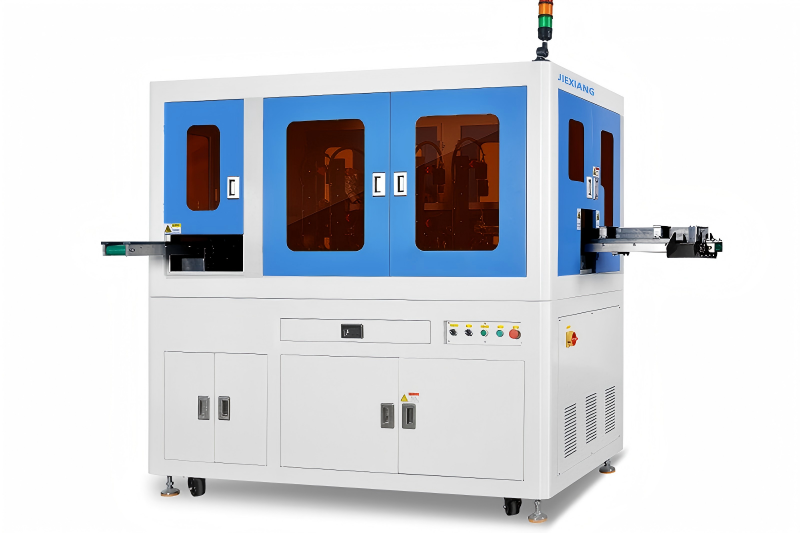
This article explains the most important testing parameters for magnetic cores, why they matter, and how automated Magnetic Core Testing Equipment helps achieve accurate and consistent results.
1. Core Loss (Iron Loss)
One of the most critical parameters in magnetic core testing is core loss, sometimes called iron loss. Core loss refers to the energy lost in the magnetic material as it undergoes cyclic magnetization. It typically includes:
-
Hysteresis loss – energy lost due to the repeated magnetization cycle
-
Eddy current loss – energy lost due to currents induced in conductive parts of the core
High core loss not only reduces efficiency but also generates heat, which can impact device reliability. Accurate measurement of core loss is essential for energy-saving designs, especially in transformers and inductors used in power electronics.
2. Magnetic Permeability
Magnetic permeability measures how easily a material can be magnetized. It affects how efficiently magnetic flux can pass through the core.
-
High permeability is desired for transformers and inductors requiring strong flux guidance
-
Low permeability may lead to reduced efficiency or increased power consumption
Testing permeability ensures that cores meet design specifications and operate reliably under varying electrical loads.
3. Saturation Flux Density
Saturation flux density (Bsat) indicates the maximum magnetic flux a core can handle before it saturates. When a core reaches saturation, its inductance drops, and the device may fail to operate properly.
-
Testing Bsat helps engineers choose the correct core for high-current applications
-
Avoids overheating and potential damage in transformers, chokes, and inductors
Without proper Bsat measurement, products may fail under normal operating conditions, leading to recalls or reduced lifespan.
4. Coercivity
Coercivity (Hc) refers to the material’s resistance to demagnetization. It is especially important for cores used in high-frequency applications or in environments where magnetic fields may fluctuate.
-
Low coercivity cores are easier to magnetize and demagnetize repeatedly
-
High coercivity cores may retain residual magnetization, which can affect performance
Accurate Hc testing ensures that the core will behave predictably under real-world operating conditions.
5. Inductance and Impedance
For many practical applications, inductance (L) and impedance (Z) are also critical parameters:
-
Inductance affects energy storage and filtering capabilities
-
Impedance influences current flow and voltage stability
Automated testing equipment measures these electrical characteristics along with magnetic properties to provide a complete performance profile.
6. Why Automated Testing Matters
Testing these parameters manually is not only slow but also prone to human error. Modern Magnetic Core Testing Equipment automates measurement, providing:
-
Consistent, repeatable results
-
Faster processing for large production batches
-
Real-time data recording for quality control
-
Reduced risk of defective cores entering assembly lines
As a result, automated testing ensures that every core meets design requirements, enhancing product reliability and energy efficiency.
Conclusion
When testing magnetic cores, the most important parameters include core loss, permeability, saturation flux density, coercivity, inductance, and impedance. Accurate measurement of these factors ensures that magnetic components perform efficiently, safely, and reliably. Automated testing equipment provides the precision, speed, and data management required to maintain high-quality production standards in modern electronics and power industries.
Recent Posts


Contact US
Product Information
Quantity
Unit
Piece
Support order samples, customization, wholesale direct, and complete payment. If the product you look for does not have corresponding customized content, pls fill out the form below to contact us, and we will reply ASAP.