


Why Is Hanging Screw Detection and Screening Becoming Necessary in Modern Manufacturing?
2025-12-16
In many manufacturing industries, screws are among the smallest components used, yet they play a critical role in product safety and structural stability. Hanging screws, in particular, are widely used in electronics, automotive parts, home appliances, and industrial assemblies. Because of their functional importance, even minor dimensional or surface defects can lead to assembly failures, loose connections, or long-term reliability issues.
As production volumes increase and tolerance requirements become stricter, traditional manual inspection methods are struggling to keep up. This is why the Hanging Screw Detection and Screening Machine is gaining attention as a reliable and efficient solution for automated inspection.
1. What Problems Exist in Manual Hanging Screw Inspection?
For many factories, hanging screw inspection has long relied on visual checks and manual measurement. While this approach may work in low-volume production, it introduces several challenges in modern manufacturing environments:
-
Inconsistent inspection results between operators
-
Difficulty detecting subtle defects at high speed
-
High labor intensity and operator fatigue
-
Limited traceability and data recording
Hanging screws are small, reflective, and often produced in large batches. Manually checking thread quality, length accuracy, head shape, or surface damage requires high concentration, and mistakes are difficult to avoid. Over time, inspection accuracy may decline, which directly affects product quality.
And to be honest, relying purely on human inspection for thousands of screws per hour is not very realistic anymore.
2. What Does a Hanging Screw Detection and Screening Machine Do?
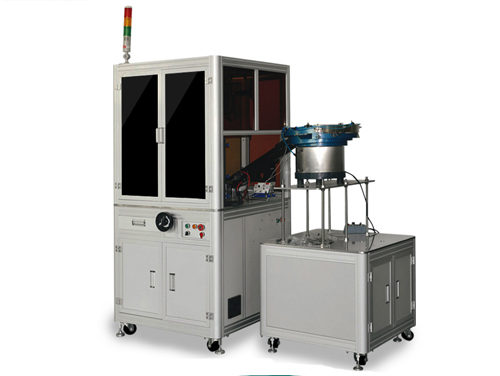
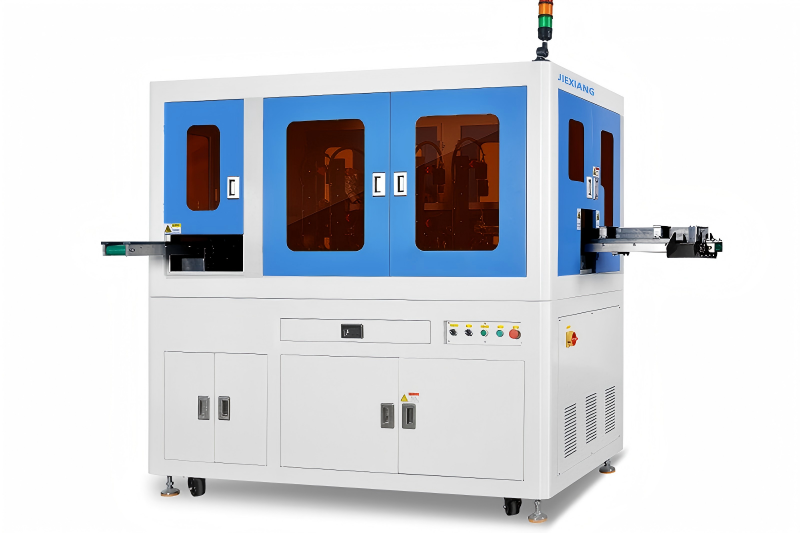
A Hanging Screw Detection and Screening Machine is designed to automatically inspect screws and judge their quality in a single, continuous process. By integrating optical detection, precision measurement, and intelligent algorithms, the machine replaces repetitive manual inspection work.
Typically, the machine can detect:
-
Overall length and diameter deviations
-
Thread defects or damage
-
Head shape and size inconsistencies
-
Surface scratches or deformation
-
Abnormal orientation or missing features
After inspection, qualified and unqualified screws are automatically separated. This ensures that only compliant components proceed to the next production stage.
3. How Automated Screening Improves Production Quality
① Improved Inspection Accuracy
Automated systems perform inspections based on predefined standards. Measurement results are consistent and repeatable, regardless of production volume or shift duration. This helps eliminate subjective judgment errors that often occur in manual inspection.
② Higher Inspection Speed
The machine can inspect screws at a much higher speed than manual methods. This allows inspection to keep pace with upstream manufacturing and downstream assembly lines, reducing bottlenecks.
③ Stable and Predictable Quality Control
When inspection results are stable, production planning becomes easier. Engineers can rely on consistent incoming material quality instead of reacting to random defects.
④ Reduced Risk of Assembly Failures
Defective hanging screws can cause assembly problems such as poor fastening, vibration issues, or premature product failure. Screening these defects early helps protect the entire manufacturing process.
4. Why This Matters in Daily-Life Products
Although consumers rarely notice screws, hanging screws are everywhere in daily-use products:
-
Internal structures of household appliances
-
Mounting points in electronic devices
-
Automotive interior and exterior assemblies
-
Industrial equipment housings
If a hanging screw fails, the product may loosen, vibrate, or break over time. Automated detection ensures that these hidden components meet strict quality requirements, contributing to safer and more reliable products.
This also explains why more manufacturers are upgrading their inspection systems instead of relying on manual checks.
Recent Posts
Contact US
Product Information
Quantity
Unit
Piece
Support order samples, customization, wholesale direct, and complete payment. If the product you look for does not have corresponding customized content, pls fill out the form below to contact us, and we will reply ASAP.