
How Do Chip Capacitor and Resistor Screening Machines Improve SMT Line Stability?
2025-12-02
In our previous article, we explored why automated detection and screening machines have become essential for evaluating chip capacitors and resistors. Today, we take a step forward and address a practical question many manufacturers care about:
How exactly do these screening machines improve the stability and efficiency of SMT (Surface Mount Technology) production lines?
This is an important topic because SMT lines operate at extremely high speeds and require strict consistency. Even a tiny defective component can disrupt the entire workflow. By understanding the role of automated screening, manufacturers can better plan their quality control strategies and minimize production risks.
1. Why SMT Lines Need Stable, Defect-Free Components
Before components reach the PCB, they pass through stages such as:
-
Solder paste printing
-
Component placement
-
Reflow soldering
-
AOI/SPI inspection
-
Functional testing
In this chain, chip capacitors and resistors represent some of the highest-volume components. Because of their tiny size, it takes very little to cause trouble. A slight crack, deformation, marking error, or size deviation may cause:
-
Soldering misalignment
-
Solder bridges
-
Tombstoning
-
Intermittent electrical issues
-
Early product failures
And when SMT equipment runs at thousands of placements per minute, one bad component can disrupt a full batch. That’s why high-volume factories are shifting toward automated pre-screening.
2. How Automated Screening Strengthens SMT Line Stability
① Eliminating Defects Before They Cause Problems
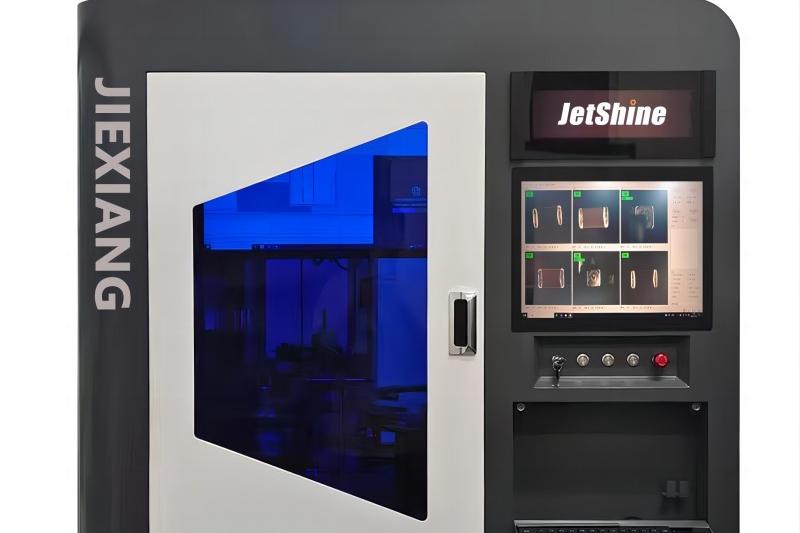
The Chip Capacitor and Resistor Detection and Screening Machine acts as an upstream quality gate. Components are inspected before they enter high-speed pick-and-place machines.
This proactive filtering prevents:
-
Machine alarms
-
Placement errors
-
Overheating caused by hidden cracks
-
Line stop events caused by abnormal components
A stable SMT line is always more productive, and automated screening contributes directly to that stability.
② Supporting Consistent Solder Joint Quality
Consistent dimensions and surface quality help ensure proper wetting during reflow soldering. When size variation is minimized, the reflow curve behaves more predictably.
In other words, better component quality leads to stronger, more reliable solder joints.
If the dimensions “jump around,” solder performance becomes less stable—something every SMT engineer tries to avoid.
③ Reducing False Failures at AOI and SPI
AOI systems detect visual characteristics, while SPI systems analyze solder paste thickness. However, some false alarms occur because the components themselves vary too much.
Automated screening helps address this issue by stabilizing:
-
Component size
-
Orientation
-
External shape
-
Terminal consistency
This directly lowers AOI false calls and reduces the time operators spend verifying questionable results.
④ Improving Material Flow and Production Rhythm
Stable input equals stable output.
When the screening machine removes defective materials early, the SMT line experiences fewer interruptions.
Production planners often comment that the smooth rhythm of an SMT line is more valuable than most people realize. Downtime costs accumulate quickly, and automated inspection helps avoid them.
3. Long-Term Benefits for Electronics Manufacturers
Using a chip capacitor and resistor screening system is not only a short-term efficiency upgrade—it supports long-term competitiveness.
✔ Better Traceability
Inspection data can be stored and analyzed for supplier management, internal audits, and quality reports.
✔ Improved Yield Rate
Fewer defects reach the PCB, so fewer defects reach final testing. Yield rates increase naturally.
✔ Lower Rework and Scrap
Bad components no longer enter the assembly line, reducing the number of boards needing repair or scrapping.
✔ More Predictable SMT Performance
Consistency allows engineers to fine-tune parameters such as:
-
Feeder settings
-
Pick-up height
-
Reflow profiles
-
AOI thresholds
In fact, better component uniformity makes the whole line easier to manage.
✔ Support for Full Automation and Smart Factories
As factories move toward Industry 4.0, automated inspection becomes a core building block.
And honestly, no one wants to go back to manually inspecting components in huge quantities—it’s just not realistic anymore.
4. Connecting to the Previous Article
In Last article, we discussed why these machines are becoming essential.
In this article, we showed how they improve SMT line stability.
Together, they form a logical progression:
-
First: Understand the importance of screening
-
Then: Understand how it directly affects manufacturing performance
In the upcoming articles, we can further expand this matrix by exploring:
-
How component screening integrates with vision AI systems
-
The difference between online vs. offline screening
-
What to consider when choosing a screening machine
This keeps the content practical and useful for readers who want industry insights.
Recent Posts
Contact US
Product Information
Quantity
Unit
Piece
Support order samples, customization, wholesale direct, and complete payment. If the product you look for does not have corresponding customized content, pls fill out the form below to contact us, and we will reply ASAP.